Projects
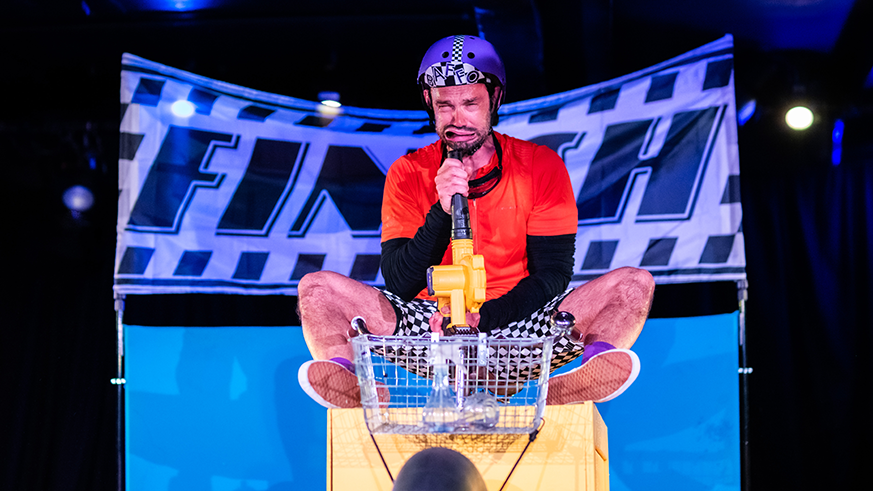
Clowning in Virtual Reality
Clowning in Virtual Reality
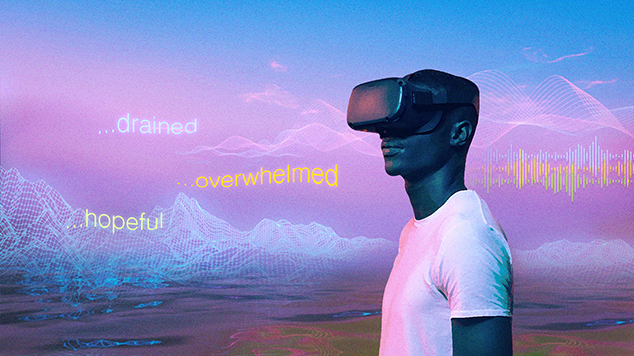
I will explore how clowning, which relies on subtle audience feedback and live responsiveness can work in virtual reality.
Working with technologists and a director, I will test simple VR environments and avatars to see what kinds of interaction preserve clowning’s humour and playfulness. Small groups of teenagers will trial these experiments, helping me discover whether VR can provide authentic ways to reach this tricky audience while keeping my practice rooted in traditional clowning.
Clowning thrives on nuance: a raised eyebrow, a child’s giggle, a moment of hesitation can change the direction of a scene. In VR, those micro-reactions risk being lost. I want to test whether, and how, immersive technologies can support the same depth of interaction, spontaneity, and humour that define my live work with families.
Explore
£5,000

Aims of the project
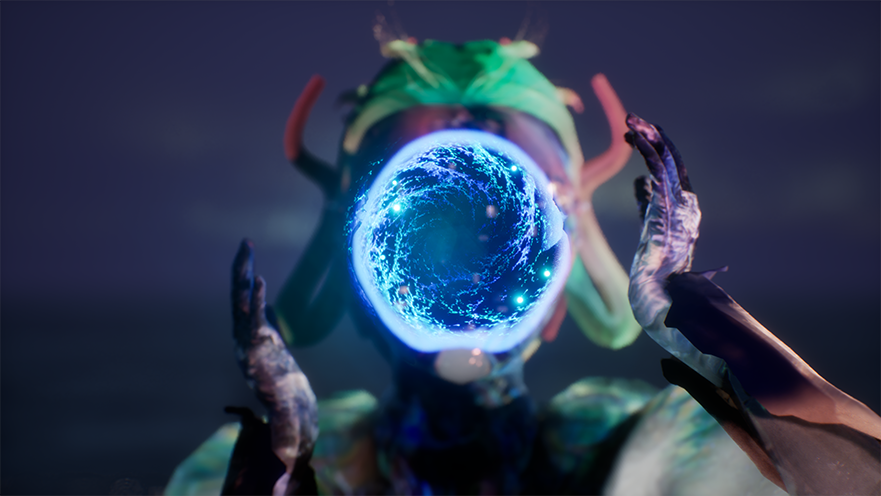
With this funding I will run a period of R&D using VR headsets, working alongside technologists to build simple environments and avatars that can respond to performance cues.
The focus will not be on creating a finished piece but on running structured experiments: testing audience avatars, exploring sound cues, and trialling responsive spaces that shift in reaction to clowning gestures.
I will invite a small group of teenagers and older children to take part in these trials. This age group is both most comfortable with VR and, crucially, the trickiest demographic for me to reach with my current family theatre practice. Testing with them offers a meaningful way to explore whether immersive tech can provide a “way in” for an audience I find harder to connect with through live clowning alone. Their responses will help me understand what kinds of interactivity feel playful, natural, or frustrating.
To stretch my practice, I will collaborate with directors I know from live clowning, as well as a new VR-based collaborator, to examine what translates and what doesn’t. The activity will culminate in a short report documenting what kinds of VR interactions best support clowning and where the limits lie.
My central question is: How can clowning (which depends on subtle audience feedback, shared play, and direct connection) work in virtual reality, where performer and audience are separated by headsets and limited to broad signals?
Meet the artist

Oliver Harrison
Lead artist
he/him
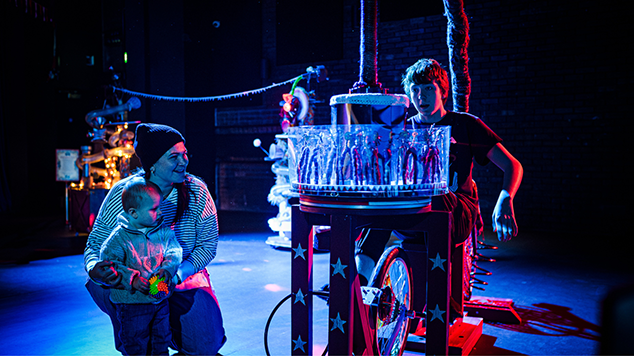
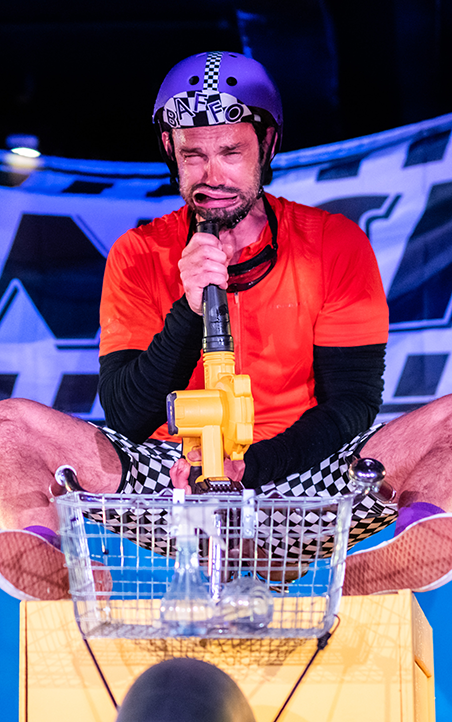
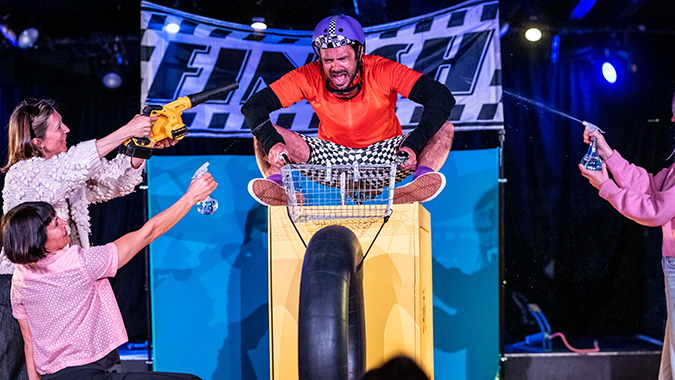
Olly is a clown, actor and theatre maker specialising in bold, playful work for children and families. As the artistic force behind Oh! Productions, he creates character-led, visually inventive shows rooted in classic clowning, audience interaction and comic subversion. His work delights in flipping expectations: magic tricks unravel, authority figures wobble, and chaos gently reigns.
He has created and toured shows including On Your Bike Baffo and Signor Baffo’s Restaurant, both blending theatrical craft with infectious silliness. Olly’s performances champion accessibility, heart and mischief, bringing high-quality live theatre to young audiences in theatres, village halls and beyond.